They Said Our Inheritance Was Our Education
My grandfather came from what was then known as Czechoslovakia. He married a Danish woman, built a mining equipment company, and raised his boys in the kind of place where private school was simply what came next. It was not a boastful life. It was an earned one. And then, in 1974, the Dutch government seized the Aruban gold mine. It was gone overnight. What followed was a slow unravelling that was almost worse than the loss itself: the leveraging of what remained, the second mortgage, the gradual realizations that there was no coming back. My dad watched all of it and bore witness to the stress that took root inside of his father.
My father was eighteen when his own father died. He was still in high school, just one year left, grade 13, the year that stood between him and everything after. There was no home to fall back on. What remained had been sold to satisfy creditors. He watched leverage work in reverse: a kind of financial erosion that doesn't just take the money, it takes everything the money was holding up. He never forgot what that looked like. But he was eighteen, and what eighteen-year-olds hold onto, even in the worst of it, is the ordinary. There were his friends, his classmates, the ordinary continuity of life he had always assumed would just continue. And then there wasn't. He was about to leave the one place that felt like solid ground.
Out of his own pocket, the then headmaster, made sure he could stay.
I have thought about that a lot. Not the money, the gesture. He didn't just pay the tuition. He quietly coordinated with Queen's University to defer my father's first year, making sure that family came first, that my father could work, look after his younger brother, and arrive at university on his own terms when the time was right. Someone looked at a boy standing at the edge of something, responsible for things beyond his years, and decided, without being asked, to hold the door open. They became friends after graduation. My father has donated to the school's bursary fund every year since.
When someone shows up for you at exactly the right moment, it changes the way you move through the world. You start to understand generosity isn't meant to be repaid. It's meant to be passed on.
He finished high school with his friends. That was the gift, just that. What came next, he earned himself. For a year, while his peers moved on, he worked. He looked after his younger brother. He saved his own university tuition, dollar by dollar, and arrived at Queen's the following year, not as someone who had been handed a future but as someone who had built the first floor of one with his own hands.
He met my mother there. He went on to Brunel for his MBA. He had wanted to be a hockey coach; my mother's father would later gently guide him toward something steadier, and some fortuitous turn confirmed it. He became a teacher. He was good at it in the way people are good at things they didn't originally choose, which is to say, genuinely, and without needing to be told.
He didn't become the man he was despite what happened at eighteen. He became him because of it. What I know about my father and money is mostly what I pieced together later. He didn't talk about it the way people talk about it now, openly, anxiously, with spreadsheets and podcasts and an app on their phone. He talked about it the way his generation talked about the most important things: quietly, through decisions, through what he did and didn't do.
Some of those decisions came from wisdom that wasn't originally his. My mother's father was a dentist, a man who had also built something from nothing, and he had learned the hard way that you cannot always be excellent at two things at once.
He tried to manage his own money while building his dental practice and it had cost him. So he handed the responsibility to someone else and never looked back. My father heard that and understood it immediately. He found someone he trusted, someone whose judgment he had seen up close and whose expertise he trusted, and let him do his job. He stayed curious, asked questions, participated in the decisions. That was the first choice he made with the future in mind. It wouldn't be the last.
Some people called him frugal. He called it freedom. He never spent beyond what he earned. He never took on debt he didn't need, not as a restriction but as a refusal to ever be left exposed the way his family had been. Debt, he would tell you, is not just a balance sheet item. It's an enemy of freedom. Like the Habs are to the Leafs. And yet there's nothing fearful about the way he moved through the world. He had the steady, quiet confidence not of someone who had never known uncertainty, but of someone who had looked directly and decided, without drama, that it would not define him.
That confidence showed up in the decisions that looked, from the outside, like sacrifices. He sent his children to the same school he had attended. This was not nothing. It was a real financial choice, made in the full awareness of the short-term pressure it created. But he held the line. He believed the investment would pay off, not just in credentials or career, but in something harder to name. A fluency. The confidence that comes not from what you're given, but from watching the people who raised you choose the harder thing on your behalf.
My father wasn't building wealth for himself. He was building a floor his children would never fall through.
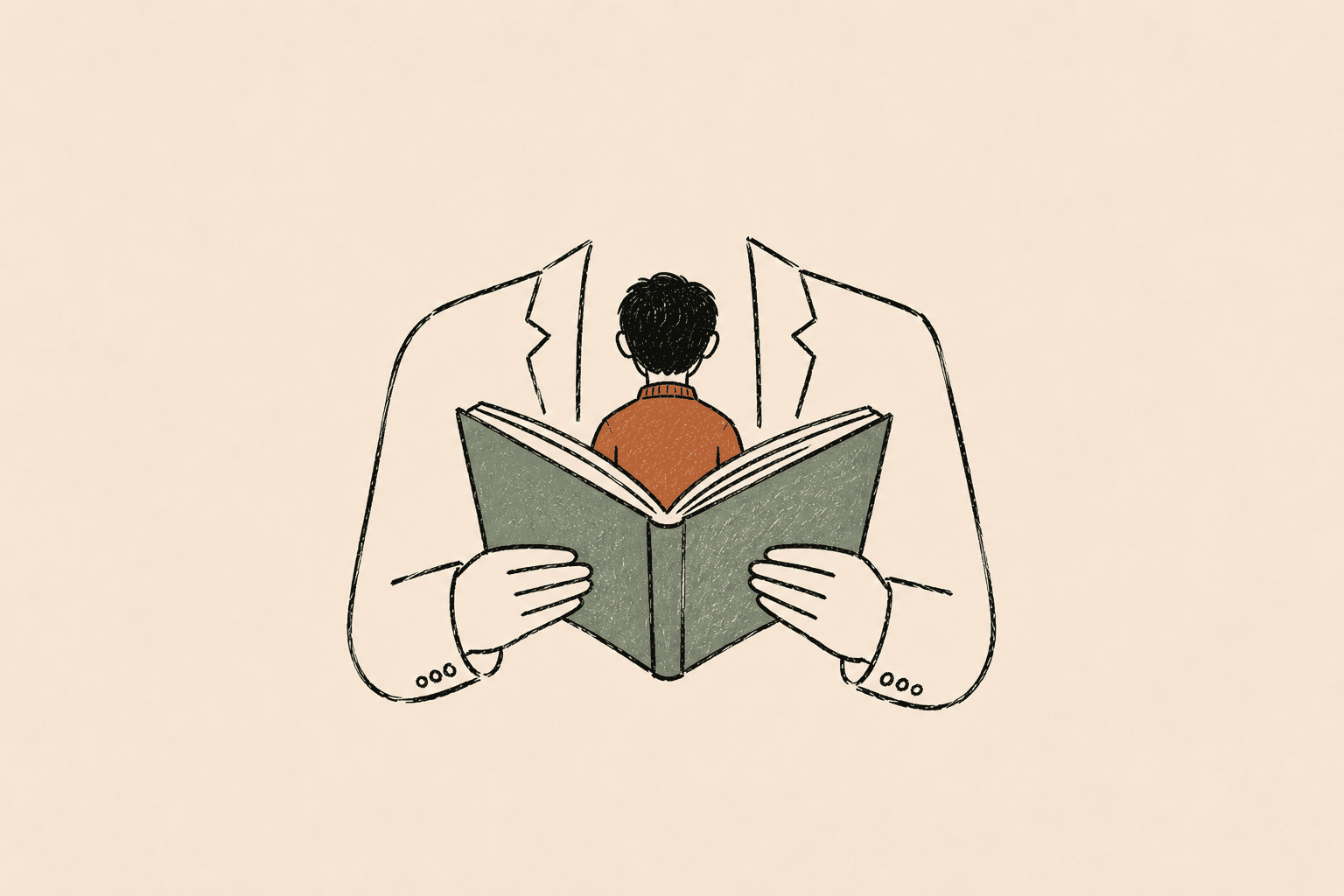
The joke in our family is that our inheritance was our education. It's the kind of joke that's also simply the truth, stated plainly enough that no one has to feel sentimental about it. But I think about what it took to make that true. The patience. The discipline.
My parents have a house on Prince Edward Island now. Red cliffs and salt air and a quiet that settles over everything by seven in the evening. It's the kind of thing that sounds simple but isn't. It existed on a long list of things they wanted but deliberately chose to wait for, the dream deferred, intentionally, until the last tuition payment was made and all three of us had graduated. Only then did they build it. It isn't serendipity. It's discipline made visible.
PEI matters to them in a way that I struggle to articulate. It's not an asset or a line in a will. It's a place where the light comes off the water, the evening breeze dances through the dunes, and nothing else matters. It wasn't on any plan they wrote down, but it became possible because of the plan they kept. And one day, long after they're gone, it will be the place where we remember them.
My father is a high school teacher. He is the son of immigrants who built something in a country that wasn't theirs yet, and the beneficiary of a headmaster who, for reasons I will never fully know, decided that one boy's future was worth investing in. He is a man who understood, earlier than most, that money is not the point, and that understanding how to create wealth is how you get to live like it isn't.
Some would say our inheritance was our education. What I understand now is that the real inheritance was the way they thought: with the future in mind. The patience to delay gratification. The discipline to stay the course. The willingness to trust the right people while remaining engaged enough to understand the decisions being made. They never confused delegation with disengagement.
That turns out to be worth more than most things you can put a number on.
My father wasn't building wealth for himself. He was building a floor his children would never fall through.